
How to Get Court Records
Every Alexander County court-record request starts with the North Carolina eCourts Portal Smart Search. Note the case number, the court or division, and the document or event you want. Also decide up front whether a plain copy will do or you need certification. The Portal’s Register of Actions gives a current case summary. Treat it as a summary only. It is not the official court record. You also cannot assume it lists every document filed in the case.
The Alexander County Clerk of Superior Court holds the county’s court files. That covers Superior Court and District Court matters alike. Visit or call that office. Ask there for a document from the case file, a certified copy, an older paper record, or in-person inspection when eligible. Public self-service terminals offer another non-certified viewing route. Court-file requests do not go through the county-government public-records form or the Register of Deeds.
- Locate the case in Smart Search and save the exact case number.
- Decide whether the Case Summary, a document copy, or a certificate is needed.
- Ask the clerk about eligible inspection, plain copies, certification, or an older file.
- Confirm charges and any record-access restriction before ordering.
- Use the court reporter or recording channel when the request is for a transcript or available audio.
Alexander County Court Record Types
An Alexander County court record is really several products. The source, official status, and fee all shift depending on which one you want. A Register of Actions is the Portal’s chronology and case summary. A filed document is the real thing. It may be a pleading, order, judgment, exhibit, or recording held in the file. A certified copy is a clerk-authenticated service. A transcript is a separate written record of proceedings.
On the Portal, you may see case information, events, hearings, and dispositions. Financial information appears when available. That result never replaces an order or a certified judgment. Name the item you need instead of asking broadly for everything about a case. A focused Alexander County clerk request helps the office spot any access limit quickly.
- Register of Actions or Case Summary.
- Filed pleading, order, judgment, exhibit, or other case-file item.
- Plain clerk-prepared copy.
- Certificate under seal or exemplification.
- Available audio recording or a reporter-prepared transcript.
Alexander County Portal and Official Files
The Portal and the official court file do different jobs. Smart Search is free for ordinary public case information and opens the Register of Actions. From it you can trace the chronology of an Alexander County matter. The state guide says it plainly: the Register of Actions is not the official court record. The local clerk holds that status for anything filed in Alexander County.
The gap matters when a summary is not enough. A Portal event may show that an order was entered. Yet it will never supply the order itself. Financial information appears only where applicable. A judgment index is a snapshot, not full case detail. So use the Portal to find the file. Then ask the clerk for the exact document where access is allowed. The Judicial Branch court-record guidance lays out this two-step records route. It sits on the state’s own help page.
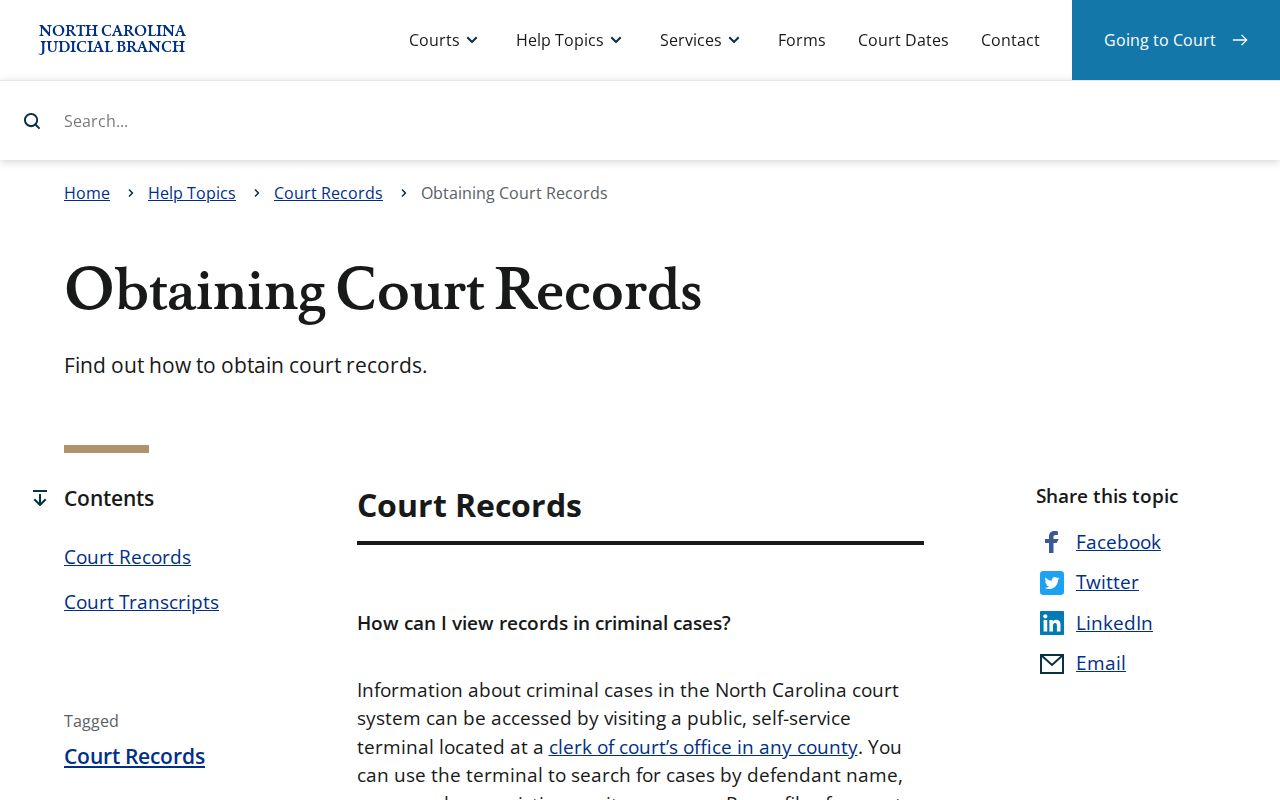
That state guidance confirms the split: case information lives online, while the county clerk holds the case file itself.
Types of Court Records
Alexander County case records come from criminal, civil, traffic, estate, special-proceeding, family, and probate routes. The case type shapes what the Portal shows. It also decides whether a document is public at all. Civil, family, probate, and mental-health categories can include a Causes of Action section. Criminal and infraction matters use their own categories and status filters. Whatever the type, one tool works best. A court case number is the best way to land on the right file.
Older Alexander County records call for one more inquiry. The courthouse fire and its replacement are real local history. They say nothing about a retention schedule, an imaging cutoff, or whether a given file survived or is online. Ask the clerk directly. Ask whether an older file is on site, electronically imaged, archived, or restricted.
Alexander County Court Record Requests
Bring specifics for an Alexander County court record request. Include the case number, parties if known, the document name or event, an approximate date, and whether certification is required. The clerk offers no generic court-copy form. Direct contact is the documented route. The courthouse sits at 29 W. Main Ave., Taylorsville, NC 28681. The clerk number is (828) 635-3113. Regular public hours run weekdays from 8 a.m. to 5 p.m.
Mail for eligible court business goes to PO Box 100, Taylorsville, NC 28681. Do not use the county-government records form for a court file. It covers county-government records under different custody rules. NCAOC administrative records follow a separate policy too. NCAOC states it is not custodian of all court documents and cannot certify an Alexander County case-file document.
Alexander County Clerk of Superior Court
Alexander County Courthouse
29 W. Main Ave.
Taylorsville, NC 28681
(828) 635-3113
Mail: PO Box 100, Taylorsville, NC 28681
What a Court Record Contains
What a complete Alexander County court record holds depends on the item you request. The Case Summary organizes the case-level information. The file holds the actual papers behind an event. A certificate under seal authenticates a clerk service. A transcript follows the court reporter or recording process. The clerk can identify the right channel, though public access still turns on the record type and the law.
| Case number | The key identifier for Portal search and a clerk request. |
|---|---|
| Case Information | Case-level summary fields in the Register of Actions. |
| Case Events | Chronological entries for filings, notices, hearings, and orders. |
| Dispositions | Recorded outcomes, read with the event history. |
| Filed document | An underlying case-file item that may need a clerk request. |
| Certification | A clerk service that is distinct from a free Portal view. |
Alexander County Older Court Records
Alexander County court history runs deep. The county dates to 1847. Fire gutted the historic courthouse in 1967, and the replacement courthouse was dedicated in 1970. The historical source says records were saved from that fire. Which record categories or date ranges exist today? An old docket search should start with the clerk and the exact record sought.
Electronic access is newer. Alexander County joined eCourts on October 13, 2025. The Portal then became the public entry point for a case lookup. That change does not mean every older file is imaged or fully viewable online. Age, archival handling, and legal restrictions all shape what a docket search returns.
For a specific historical file, confirm with the clerk. Do not infer anything from the courthouse timeline.
Certified Copies and Fees
Fees come from the statewide miscellaneous-cost chart, which lists each Alexander County clerk service separately. A plain copy costs $2 for the first page of a document. Then add $0.25 per additional page or fraction. Want it certified? A certificate under seal adds $3. Exemplification runs $10. Preparing and docketing a transcript of judgment is another $10. The chart also names a $25 statutory criminal record search. That search stands apart from ordinary Portal viewing.
Do not stack these into one invented all-inclusive price. No universal certified docket-sheet package appears on the chart. A single document request can pull in several services at once. Ask the clerk to confirm the total before counting on any fee math. Confirm the document and the certification you actually need too.
| Clerk service | Documented amount |
|---|---|
| First page of each document | $2.00 |
| Each additional page or fraction | $0.25 |
| Certificate under seal | $3.00 |
| Exemplification | $10.00 |
| Statutory criminal record search | $25.00 |
Federal fees work differently from Alexander County clerk fees, and the PACER pricing page spells out that side of the ledger.
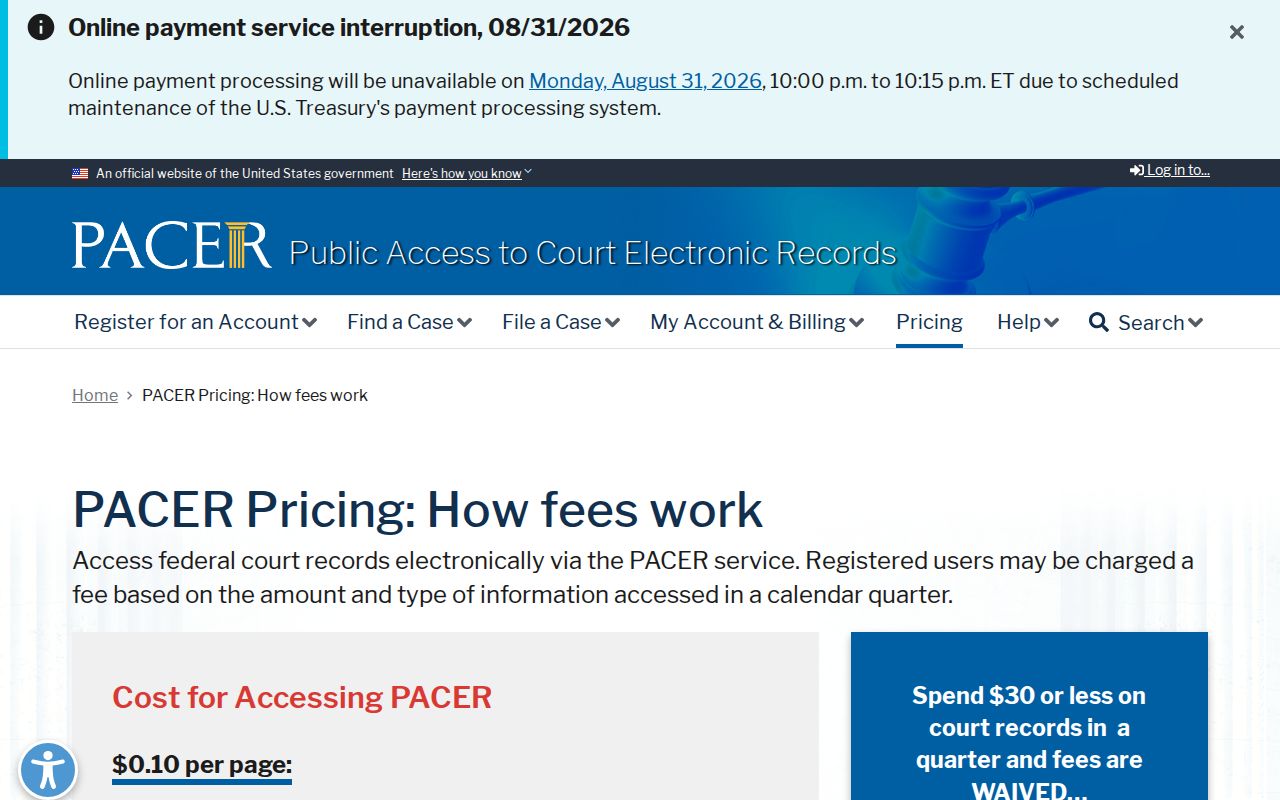
Those PACER prices cover federal records only, not a state-court case file held by the Alexander County Clerk.
Alexander County Court Record Custody
Which office holds a record depends on the court system and where the case was filed. A state case filed in Alexander County stays with the Alexander Clerk. That holds no matter where the person lives now. Federal cases are a different world. Alexander County sits in the Statesville Division of the U.S. District Court for the Western District of North Carolina. That court's electronic records run through PACER and CM/ECF.
Sending a federal matter to the Alexander Clerk gets you nowhere. The same goes for PACER. An Alexander County traffic, civil, criminal, estate, or family file does not belong there. The Western District jurisdiction page shows the federal division assignment. That split has a practical cost. A docket search in one perfectly good system can come up empty for a case living in the other.
The Western District jurisdiction page names the federal division that covers Alexander County.
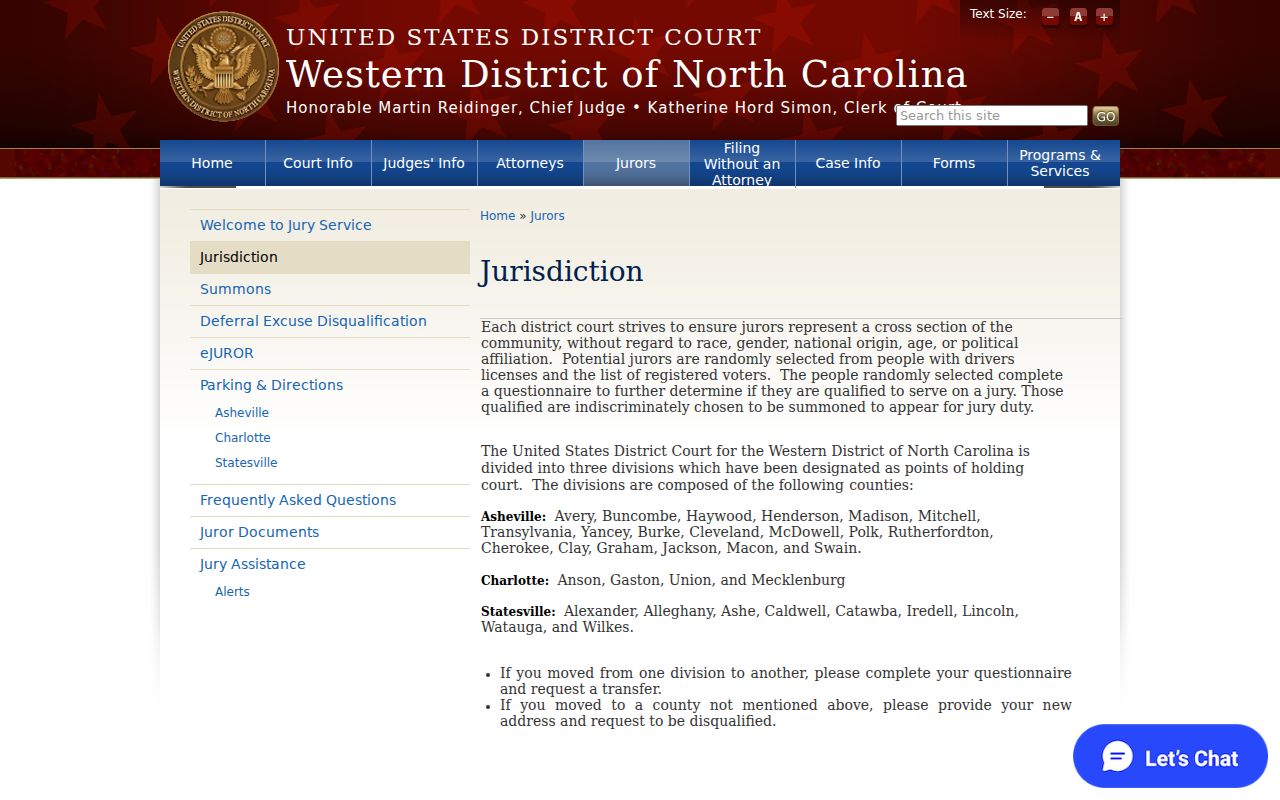
Federal courts sit in a different system, yet that map does not touch who holds the paper. The clerk at the Alexander County courthouse keeps state case files no matter what the federal docket shows. For the federal side, the Statesville federal courthouse page lays out the separate clerk route and what that office handles.
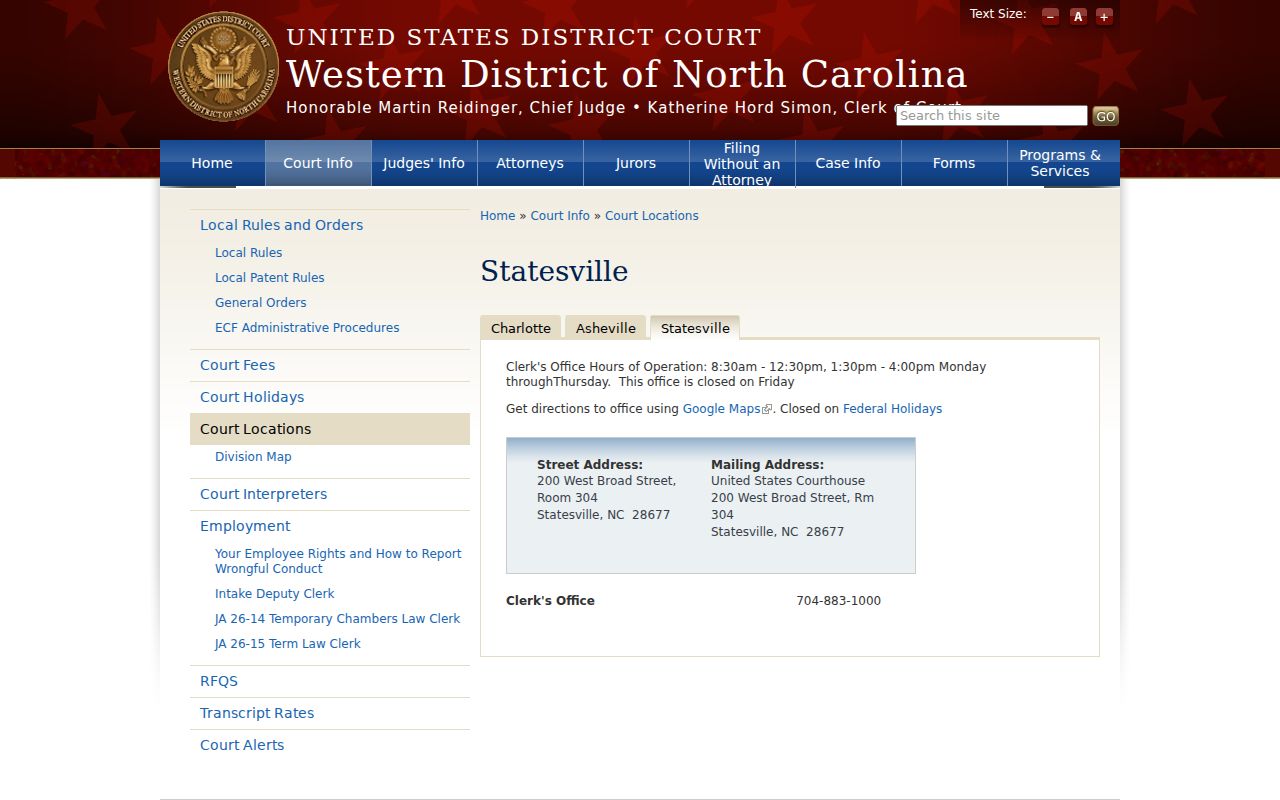
The Statesville federal clerk is a separate office from the Taylorsville state courthouse, and Alexander County case files stay with the state side.
Public Access and Sealed Records
Public access is the default. G.S. 7A-109 generally opens clerk-maintained records to inspection unless another law restricts them, and G.S. 132-6 allows supervised inspection and copies once lawful fees are paid. Confidentiality still controls what the clerk can hand over. The Portal holds back sealed and confidential material, sensitive documents, unreturned warrants, juvenile records, and protected-order information.
Some files get special treatment. Expunction disclosures are limited under G.S. 15A-151, and juvenile abuse, neglect, and dependency records are restricted under G.S. 7B-2901. If a record is missing from the Portal, don't assume a general request will free it up. Ask the Alexander County clerk about the correct access process for that file.
Access rules:
G.S. 7A-109 governs clerk record keeping and public inspection.
G.S. 132-6 addresses inspection and prompt copies.
G.S. 15A-151 limits expunction-file disclosure.