
How to Search Civil Dockets
Start at the North Carolina eCourts Portal Smart Search, the public entry point for an available Alexander County civil court docket. Alexander County joined eCourts in October 2025. Type an exact case number if you have one. Or use a party name in last-name, first-name order. The Portal's detailed case page is called the Register of Actions or Case Summary. It is a reference view rather than the official court record.
Next, open Advanced Filter Options. Pick Alexander County plus a civil case type. Party searches can be narrowed with location, date-of-birth, and status choices. Public date-of-birth display is masked, though. The Portal is the public face of Tyler Enterprise Justice (Odyssey). North Carolina File & Serve is the separate electronic-filing service, not a general public docket. Match the case information before opening the underlined case number. When a result is missing or a file image is required, the local Clerk of Superior Court keeps the county case file.
- Open the Portal and choose Smart Search.
- Enter the case number or party name in the required order.
- Select Alexander County and a fitting civil category after the basic search.
- Open the matching case number and read the Register of Actions from the header through Case Events.
- Use Search Hearings for an active setting and contact the clerk for a copy, judgment, or certification.
Alexander Civil Docket Smart Search
Smart Search reaches more than one civil path. The options include Civil General, Civil Magistrate, Civil Foreclosure (CV), Civil Foreclosure (M), Confession of Judgment, Non-Domestic Restraining Orders, and Summary Ejectment, alongside separate family, estate, and special-proceeding categories. A category only filters the docket search. It says nothing about the merits. Pair the right case status with the case type, or the results may come back incomplete.
| Portal field | Alexander civil docket use |
|---|---|
| Case number or party name | Required basic search; an exact case number gives the most focused result. |
| Location | Select Alexander County to narrow the statewide eCourts result set. |
| DOB or range | Optional name-search limiter; public-facing results mask the date of birth. |
| Civil case type | Choose a known category such as Civil General or Civil Magistrate. |
| Case Status | Use a category-appropriate status only after considering the case type. |
Note: Portal search stays free for ordinary public information, but an online result is not a certified court document.
What a Civil Docket Shows
An Alexander civil Register of Actions is organized into named sections. They give each docket entry context. Case Information and Assignment Information identify the case and its assignment. Party Information names the parties and their roles, with public date-of-birth data masked. Causes of Action is a field used for civil, family, probate, and mental-health categories when applicable. Case Events builds the chronological register. Hearings, Dispositions, and Financial Information appear only when populated.
| Case number | The case header uses the system identifier. An official general format example is 21CR000003-910; use a civil number exactly as supplied, not a reconstructed pattern. |
|---|---|
| Parties and causes | Party roles and, where applicable, the civil subject category provide context before an event is read. |
| Case Events | Chronology for filings, service, answers, motions, notices, orders, calendar events, and later activity. |
| Hearings and dispositions | Current hearing information when populated and recorded outcome details after the event history is reviewed. |
| Financial Information | Appears when applicable; it should not be treated as a current official balance without clerk confirmation. |
Alexander Civil Docket Causes of Action
Resist reading one motion, order, or status label on its own. Within the Portal, Causes of Action is the Case Summary part. It names the subject category for civil, family, probate, and mental-health matters when available. Party Information and Assignment Information also help before any conclusion is drawn from the chronological entries. The case type chosen in Smart Search is a search classification. The case record supplies the actual event history.
Work through Case Events in date order: filing or service, answer, motion, notice, hearing, order, judgment, dismissal, transfer, and post-disposition activity. Then check Dispositions and current Hearings. Not every event comes with a public document image. Sealed, sensitive, and confidential material stays out of the public view. The Civil Overall Caseload Activity Report is the official reporting source. It covers civil court activity across the state.
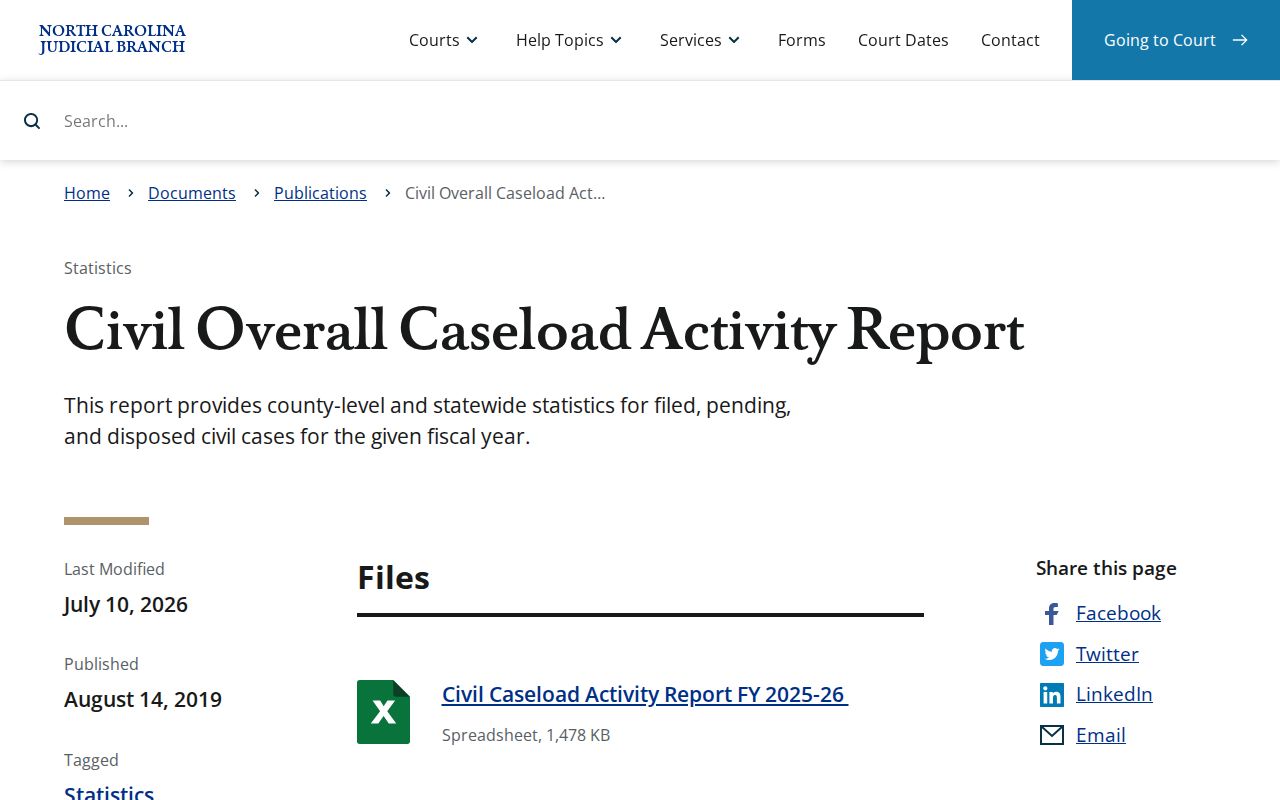
County-level reporting can frame the court system, but for the sequence of a single Alexander case, the Register of Actions is the record to read.
Note: A listed civil case type is a search category and does not determine any outcome.
Types of Civil Cases on the Docket
One Clerk of Superior Court holds the Alexander County civil records. Yet the trial route still depends on the matter. Portal categories separate ordinary civil, magistrate, foreclosure, judgment, restraining-order, and summary-ejectment paths. Estate and special-proceeding categories can carry their own access and confidentiality rules. Let the category guide the docket search. It should not replace a review of the case information and events.
- Civil General matters in the ordinary civil category.
- Civil Magistrate matters, including the small-claims route.
- Civil Foreclosure cases in the designated CV or M category.
- Confession of Judgment and Non-Domestic Restraining Order categories.
- Summary Ejectment, plus separate available family, estate, and special-proceeding categories.
Alexander Civil Docket Court Routes
North Carolina's civil jurisdiction sets the routing. Superior Court tries civil actions above $25,000. District Court tries civil actions at or below $25,000. It also holds the domestic jurisdiction assigned by law. A magistrate small claim cannot exceed $10,000 under G.S. 7A-210. Estates, guardianships, adoptions, foreclosures, and other special proceedings can be clerk matters. Those sit in categories apart from ordinary civil actions.
Those dollar amounts are jurisdiction rules, not filters to type into Smart Search. A civil case may later show transfer, appeal, or renewed activity. When the record names a new court route, inspect the successor case. Or ask the clerk which Alexander file is active. The unified clerk serves as custodian for Superior Court, District Court, magistrate, estate, and special-proceeding records in the county. G.S. 7A-210 defines the small-claim limit that governs the magistrate route.
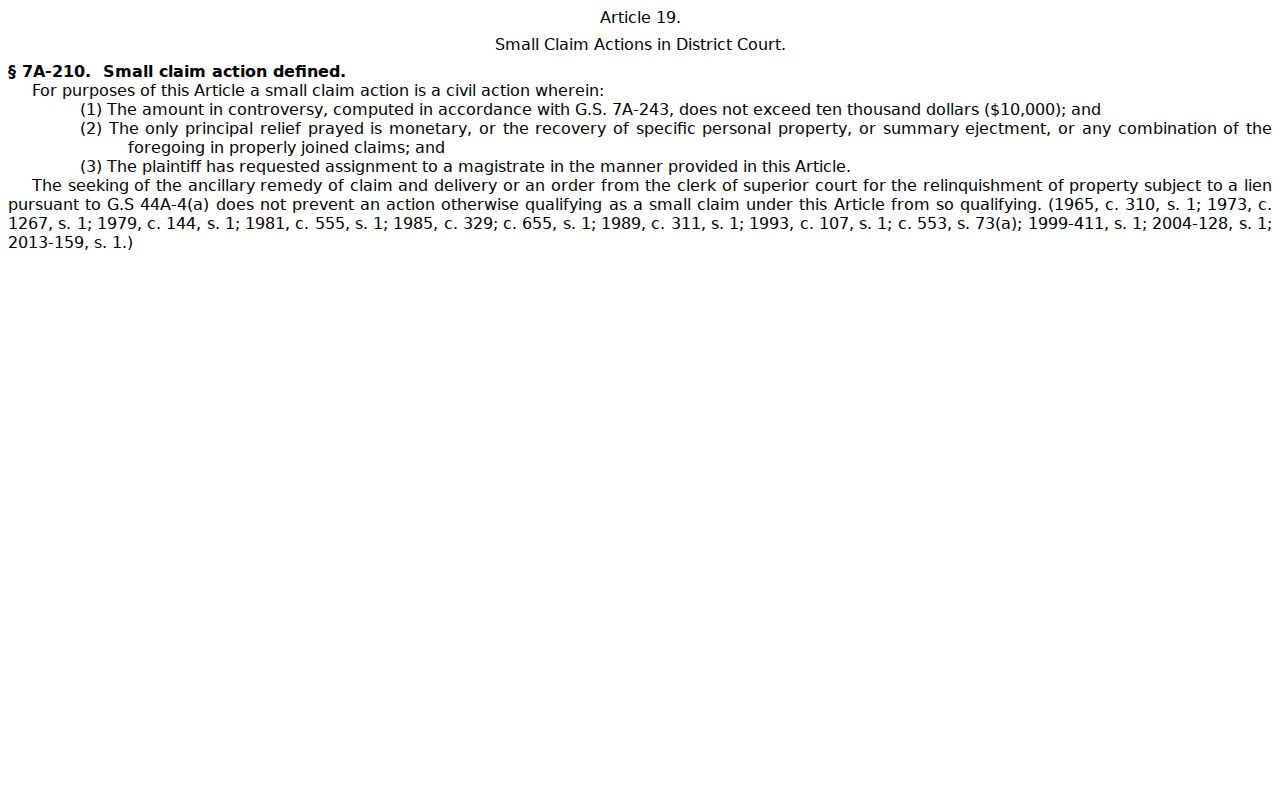
The statutory limit explains the route. For what was actually entered in a particular Alexander case, the Portal category and Register of Actions tell the story.
Settings and Hearings on Civil Dockets
A hearing date and a civil event are two different things. For upcoming settings, Search Hearings is the Portal tool built for the job. Pick Alexander County, then a Hearing Type, a search type, and a Date From and Date To range. Case Number works best when you have it. If not, you can search by Party Name. A business name, attorney information, the judicial officer, or the courtroom works too. Once you have a case open, the Register of Actions shows a Hearings section whenever one exists. Case Events may reveal an earlier notice, a completed hearing, or a continuance. Alexander's court location page also links to civil and criminal calendar resources. When a date looks close or unclear, check Search Hearings first, then the live record, then the clerk or court administrative line.
Alexander Civil Docket Calendar Requests
Why does a trial setting move? Published Alexander local materials answer that. The clerk builds civil District Court calendars under court supervision for the court. Any party who wants a setting must prepare, file, and serve a calendar request. That request should identify the matter. It should also list the estimated duration, whether it is jury or non-jury, any special circumstances, and contact details for the other side. One caution follows. The retained local-rule material uses older district numbering, so do not read its form title as current District 32 branding.
Superior Court civil cases follow their own track. A case-management assistant drafts a pretrial calendar at the start of each six-month term. It covers cases that are ready. A tentative trial calendar comes next, and a final calendar goes out three to four weeks before court. Keep in mind that a continuance needs judicial approval; filing a request never guarantees one. Trust the active Hearings section over any tentative or historical date. The Alexander local rules and forms page is the official home for published local calendating material.
Alexander Civil Docket Status Review
A case status is not the whole story. On the civil side, the Portal offers statuses such as Pending, Appealed, Completed, Disposed, Disposed - Clerk of Superior Court, Disposed - Final Judgment No Trial, Disposed - Voluntary Dismissal, Reopened, Stayed, Transfer to Another County, Transferred to Superior Court, and Unserved. One warning matters here. A status that does not match the case category can return incomplete search results.
So read the status together with Case Events and Dispositions. "Disposed" is a broad portal state, while a recorded event such as a judgment, a voluntary dismissal, a transfer, or post-disposition activity tells you more about what actually happened in the Alexander County court docket. NC Judgment Search is only an index and snapshot. For complete Case Summary detail, the Portal points searchers to Smart Search instead. The Portal result may come back incomplete. That can happen if a status does not fit the selected civil case type.
Alexander Civil Docket File Copies
Need the document itself? When the item is an order, a judgment, a pleading, or a certified copy rather than a case-summary line, the Clerk of Superior Court is the office to use. The Alexander County Courthouse sits at 29 W. Main Ave., Taylorsville, NC 28681. The clerk's listed number is (828) 635-3113. Weekday hours run 8:00 a.m. to 5:00 p.m. Free self-service terminals give public viewing of eligible records without certification.
Certification comes from the local clerk, not NCAOC, because the document lives in the county file. Alexander publishes no generic court-copy request form. So contact the office directly. Give the case number. Name the document or event you need, and say whether you want a plain copy or a certified one. And if the case was filed in another county, call that county's clerk; Alexander will not hold the record.
Alexander Clerk of Superior Court
29 W. Main Ave.
Taylorsville, NC 28681
(828) 635-3113
Weekdays, 8:00 a.m. to 5:00 p.m.
Note: The Alexander County contact directory lists the clerk and other court contact channels, and the clerk in the county where the case was filed is the right source for court-file certification.
Alexander Civil Docket Fee Choices
Viewing case information on the Portal is free. Clerk services are another matter, since statutory charges can apply. Under the statewide miscellaneous-cost chart, the first page of each document costs $2. Each additional page or fraction costs $0.25. A certificate under seal adds $3, and exemplification runs $10. Treat those as component prices. They are not a guaranteed total for every court-file request or certified judgment package.
| Clerk service | Documented amount |
|---|---|
| First page of each document | $2.00 |
| Each additional page or fraction | $0.25 |
| Certificate under seal | $3.00 |
| Exemplification | $10.00 |
North Carolina Court Costs is the official entry point for statewide court-fee information.
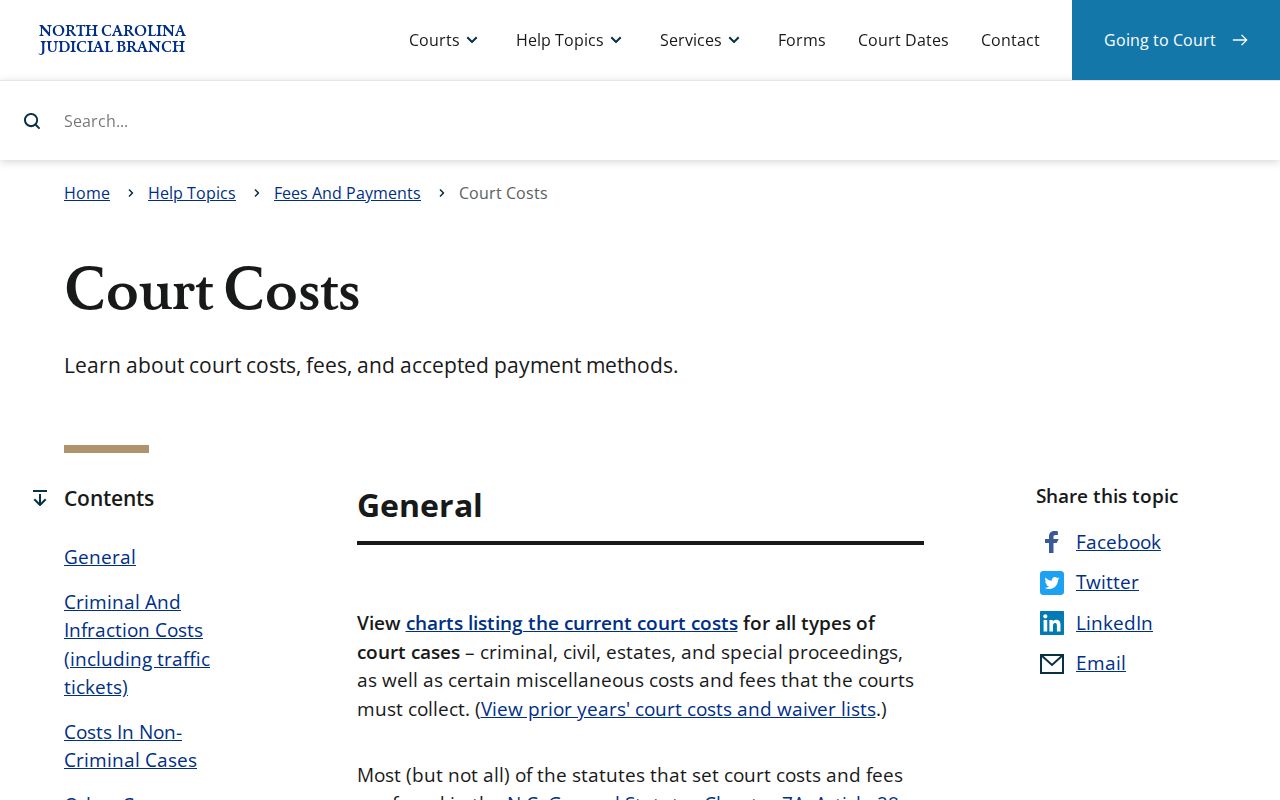
Ask the Alexander clerk to confirm the total and the certification you need before ordering.
Public Access to Civil Dockets
The law puts these records in the open. G.S. 7A-109 requires each clerk to maintain court records, files, dockets, and indexes. Those must be available for public inspection during regular office hours. Another law can override that. G.S. 132-6 adds that inspection should be reasonable and supervised. Copies come promptly once lawful fees are paid. The public Portal can serve as an online route for an available case, yet the Case Summary is not the official court record. The clerk remains the custodian of it.
Online access and in-person inspection are not the same thing. Sensitive, sealed, and confidential documents never appear in the public Portal, and a general copy request cannot turn a confidential record into a public one. When an available document holds protected information that can be separated, public-record guidance permits redaction; a fully confidential document need not be produced at all. Bring case-specific access questions to the clerk's process, especially where the Portal result seems limited.
Key Rules:
G.S. 7A-109 - Required clerk records and dockets are open for inspection unless a law makes them confidential.
G.S. 132-6 - Custodians allow reasonable inspection and provide copies after lawful fees are paid.
G.S. 7A-308 - The statute governs numerous clerk services, including copies, certificates, and record searches.
North Carolina public-records law information describes the inspection, copy, and redaction framework.
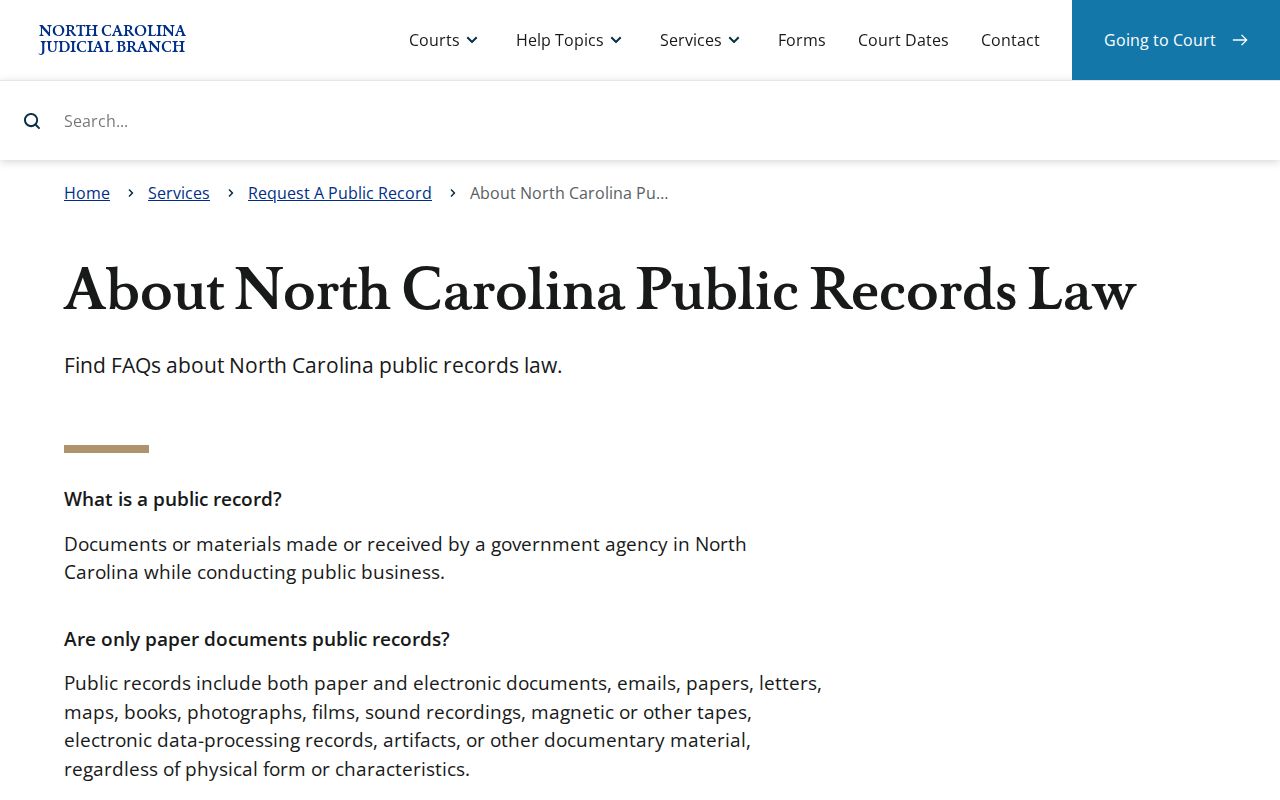
That public-record framework still leaves the court rules protecting sealed or confidential civil material fully intact. The G.S. 7A-308 fee statute governs the clerk-service charges described above.
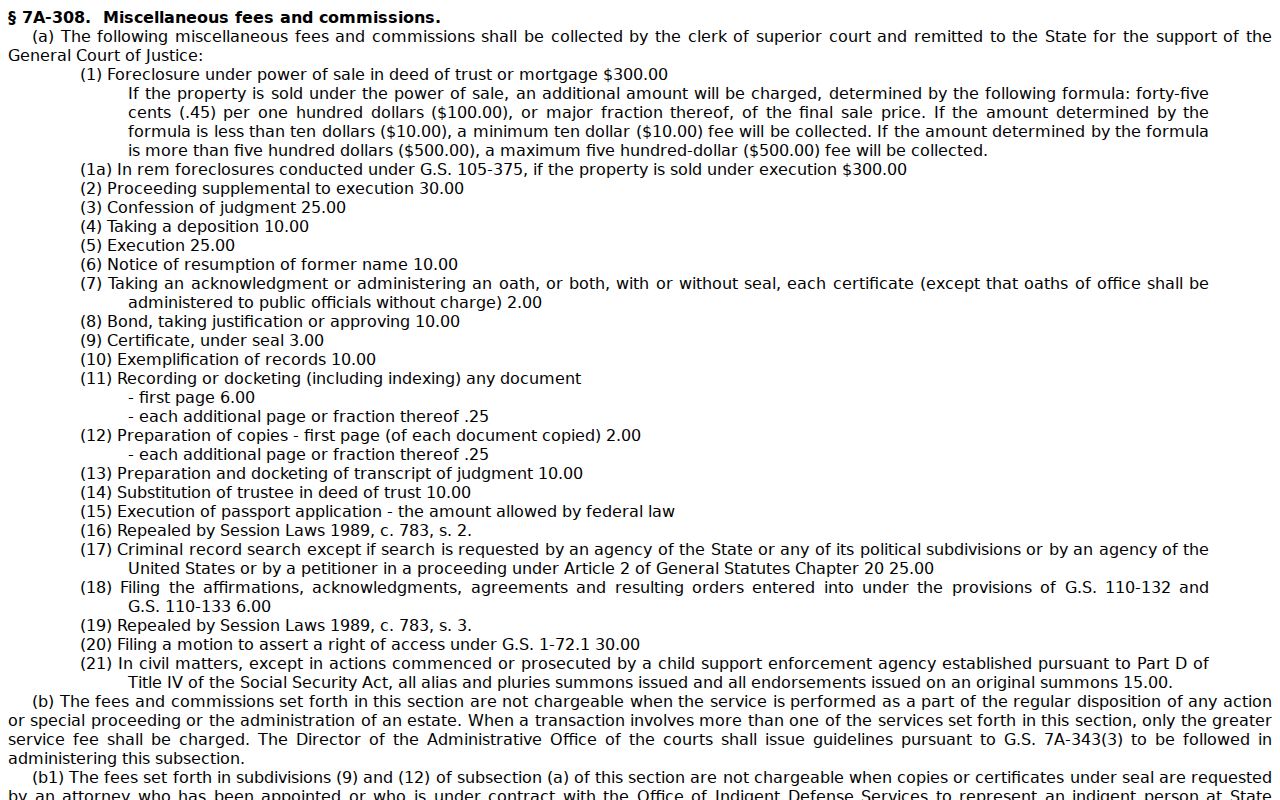
Fees for civil record requests in Alexander County rest on the statute. The clerk settles the rest, confirming which service and which amount fit a given request.
Alexander Civil Docket Portal Limits
A blank result in a public docket search proves nothing. The name or case number could be typed wrong. The case may sit in a different category, or in another court entirely. Access limits can also hide a record. So search by the exact case number when you can. Keep the category set to civil. Confirm you are searching Alexander County. If an entry hints the case moved, chase the transfer or successor entry before giving up. And treat the Portal's public summary as a summary only, never a stand-in for a certified court document.
Older paper files, missing documents, certified judgments, and file questions all lead to one door. That door is the Alexander Clerk of Superior Court. The Judicial Branch court-records guidance sorts out four separate routes: the case summary, the case file, the certified copy, and the transcript. A transcript, though, runs through the court reporter or recording process rather than the civil docket view.
Note: The county government's public-records process is separate. It cannot request a state court case file from the clerk.