
How to Search the Alexander County Court Docket
Start at the North Carolina eCourts Portal for a current Alexander County court docket. Smart Search is the entry point. It opens the public Case Summary, which the state also calls the Register of Actions. If you have an exact case number, use it. Party names work too. The Portal expects last name first. You can add Alexander County as a location filter once the search begins.
Because the Portal serves every eCourts county, check the location on any Alexander County result. Search Hearings beats Smart Search when all you need is a current setting rather than a filing history. Older files, certified copies, document images, and confusing results belong with the Alexander County Clerk of Superior Court.
- Open the Portal and choose Smart Search for an Alexander County case history.
- Enter the case number as written, or enter a party name in last-name-first order.
- Use Advanced Filter Options to narrow by Alexander County, case type, or case status.
- Select the underlined case number to read the Register of Actions and its hearing information.
- Use Search Hearings or contact the clerk when a date, document, or certification needs confirmation.
Alexander County Court Docket Portal Tools
Alexander County joined eCourts on October 13, 2025. The eCourts launch announcement describes the change as a fresh route to public case search, hearing lookup, and eligible payments. It does not open every filed document. A search result is never the official court record itself.
Inside the Portal, Smart Search pulls the Alexander County court docket Case Summary. Search Hearings takes a location, hearing type, search key, and date range to surface current settings. NC Judgment Search works as an index. It sends you back to Smart Search for detail. Make Payments covers only eligible amounts. File & Serve is a separate electronic filing service, not a public records browser.
The official eCourts launch release documents the rollout that brought the Portal to Alexander County.
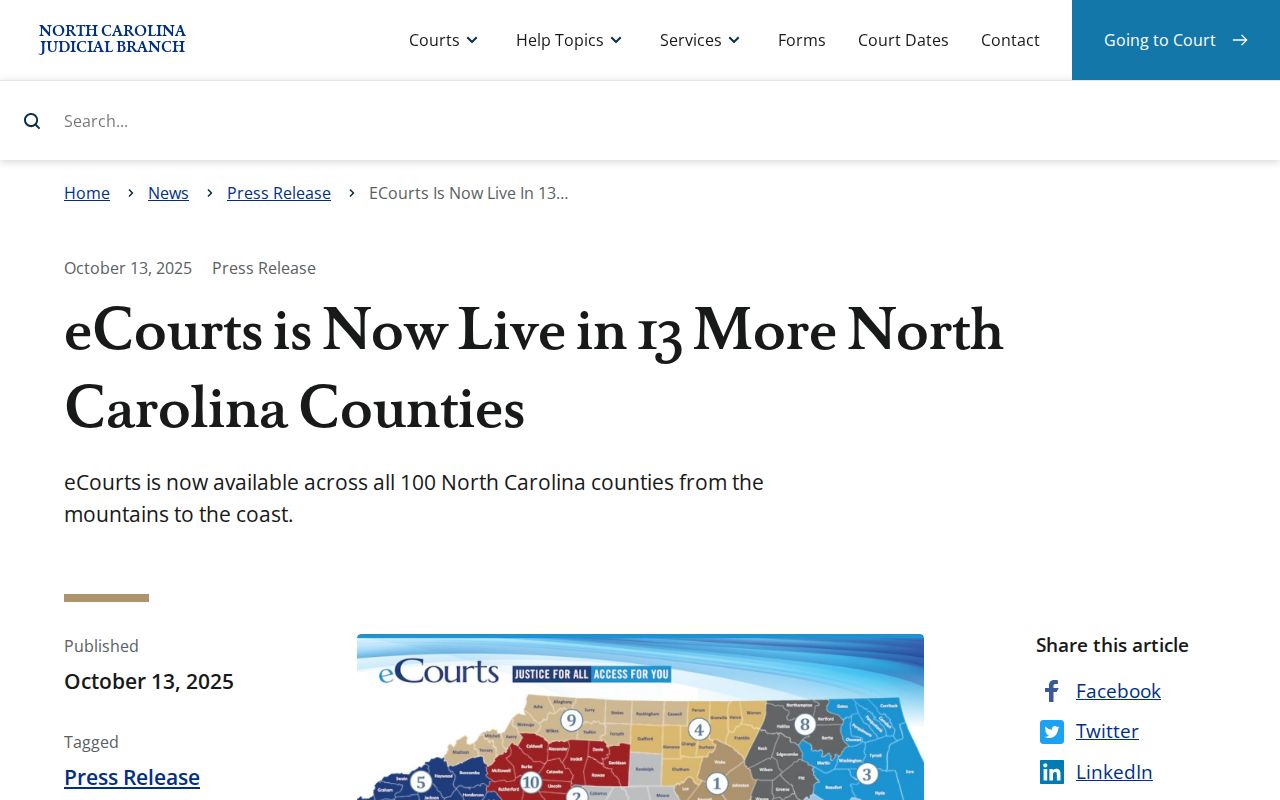
The launch changed only the public entry point. Alexander County clerk-held files and confidentiality rules still decide what may be inspected or copied.
Note: A Portal search is free for ordinary public information, but registration does not authorize access to confidential or sealed material.
What a Court Docket Shows
Think of an Alexander County court docket as a timeline with a case summary attached, not the full story of a dispute. The Portal breaks the information into named sections. It moves you from the case header to parties, events, hearings, dispositions, and any financial information. Wording and fields vary by case type. Dates of birth are masked. Sensitive material stays out of view even when a case is searchable.
Read it in order. Case and assignment information comes first, then party information, Case Events in date order, Dispositions, and current Hearings. An event line only tells you something happened on a date. It is not the active setting or a full copy of the filing. For an order, pleading, or certified judgment, ask the Alexander County clerk for the underlying file item.
| Case Information | Header details and the case number used for the most precise Alexander County search. |
|---|---|
| Assignment Information | Court or judicial-assignment context when the system contains it. |
| Party Information | Party roles, with public date-of-birth display masked. |
| Case Events | The chronological Register of Actions entries for filings, notices, hearings, orders, and movement. |
| Dispositions | Recorded outcome information that should be read with the event history. |
| Hearings | Setting information when available, best checked again through Search Hearings. |
Alexander County Court Record Filing
Public search and electronic filing in Alexander County are two different jobs. The Portal handles the public side: Case Summaries, current hearings, judgments, and eligible payments. North Carolina File & Serve is the channel for people required to file documents electronically. It runs on the state's Enterprise Justice, or Odyssey, system in eCourts counties.
Filers get a file-stamped copy and status notifications from an accepted filing. That convenience does not turn File & Serve into a public docket database. Access limits can apply to an Alexander County court record. It does not matter how it was filed. So search Smart Search first, then bring any copy or access question to the clerk.
Alexander County Register of Actions
The Portal's name for the Alexander County court docket is Register of Actions, or Case Summary, opened from a Smart Search result. Every North Carolina eCourts case number carries a two-digit year, a letter case type, a six-digit sequence, and a three-digit county identifier. The official pattern looks like 21CR000003-910. Copy the real number from a notice or result rather than building one yourself.
Type and status filters tame a crowded name search. Civil General, Civil Magistrate, Criminal, and Infraction are among the categories. Status labels include Pending, Disposed, Appealed, Stayed, Transferred to Superior Court, or Transfer to Another County, and each one needs the events and disposition fields for context. An Alexander County case can move divisions or counties without disappearing.
- Case Event
- A dated Register of Actions item recording a filing, notice, hearing, order, or other case development.
- Disposition
- The recorded resolution or outcome category for a case or charge.
- Trial De Novo
- A new Superior Court trial route after certain District Court appeals.
- Stayed
- A pause in case activity, not a final case outcome.
Which Courts Keep Dockets
Alexander County sits inside North Carolina's unified General Court of Justice. One elected Clerk of Superior Court keeps the records for both trial divisions plus clerk matters. The Alexander County judicial page lists a single courthouse location. It serves Superior Court, District Court, the clerk, and magistrate services. Sharing a building does not mean your case shares a division.
Superior Court takes felony trials, civil actions above the statutory threshold, and certain appeals. District Court covers misdemeanors, infractions, family and juvenile matters, and civil cases within its range. Magistrates handle small claims and limited criminal functions. Smart Search and the clerk are the starting point. They work across all of these Alexander County routes.
| Court or officer | Alexander County docket coverage | Where to begin |
|---|---|---|
| Superior Court, District 32 | Felony trials, civil actions above $25,000, and certain District Court appeals. | Portal Smart Search, then the Clerk of Superior Court. |
| District Court, District 32 | Misdemeanors, infractions, family matters, juvenile matters, and civil cases at or below $25,000. | Portal Smart Search or Search Hearings, then the same clerk. |
| Magistrates | Small claims up to $10,000, preliminary criminal work, and limited minor pleas or infractions. | County case system and clerk; the magistrate line is separate for contact. |
| Clerk special proceedings | Estates, guardianships, foreclosures, partitions, adoptions, and other clerk matters. | Portal category where available, with clerk confirmation for access. |
The Alexander County judicial location page shows the official local court entry point.
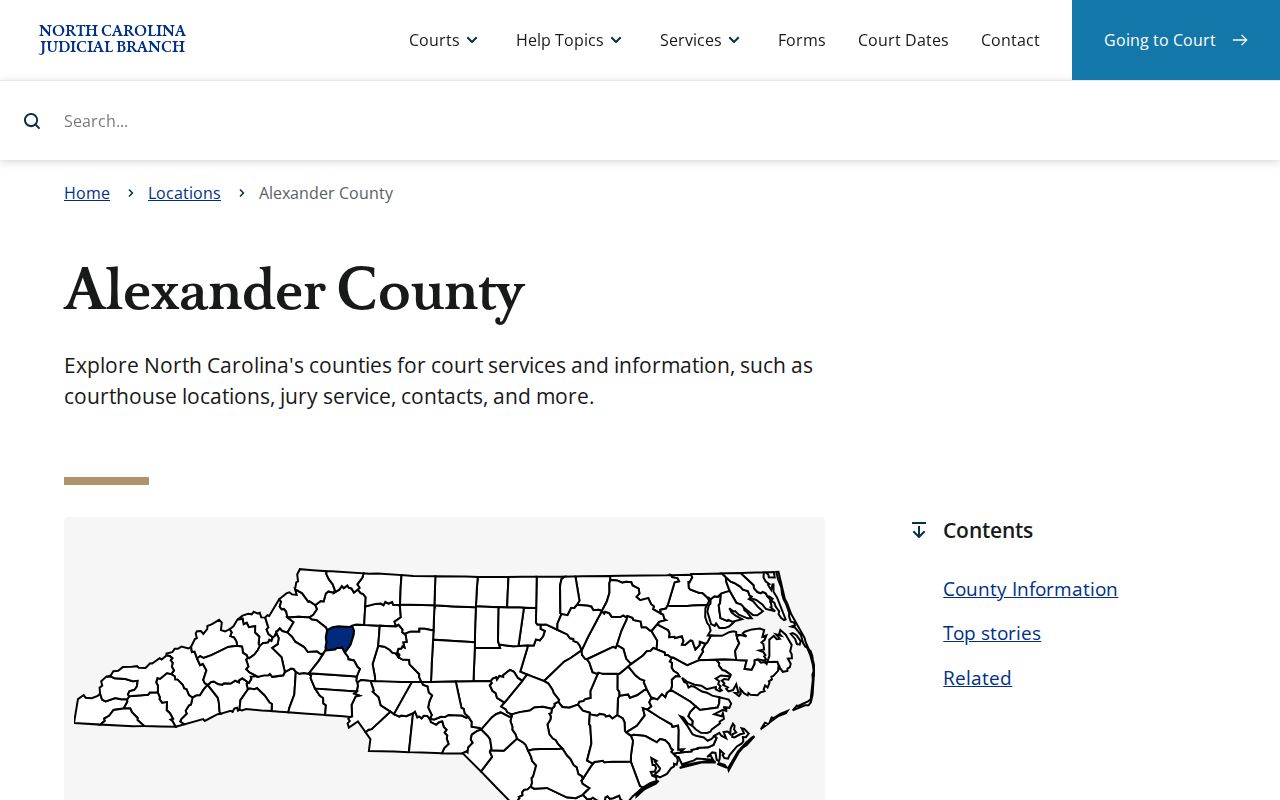
A directory label tells you which court channel handles a matter. Still, the case number and a current Portal record do the real work in an Alexander County docket search.
Alexander County Court Docket Routes
Start an Alexander County court docket search at the right desk. That desk is the clerk's. The Register of Deeds does not hold court files, and neither does county administration. A county public-records request form exists, but it covers county-government records only. For any court file question, go to the Clerk of Superior Court in Alexander County. Federal cases draw a second line. Alexander County sits in the Statesville Division. That division belongs to the U.S. District Court for the Western District of North Carolina. A criminal, traffic, family, estate, or small-claims matter runs through the Alexander County eCourts and clerk route. It does not go through PACER. Federal matters go the other way. They head to the federal clerk and PACER. That split is often why a valid docket search in the Portal comes back empty. The official courthouse page lists the state-court location that handles Alexander County records.
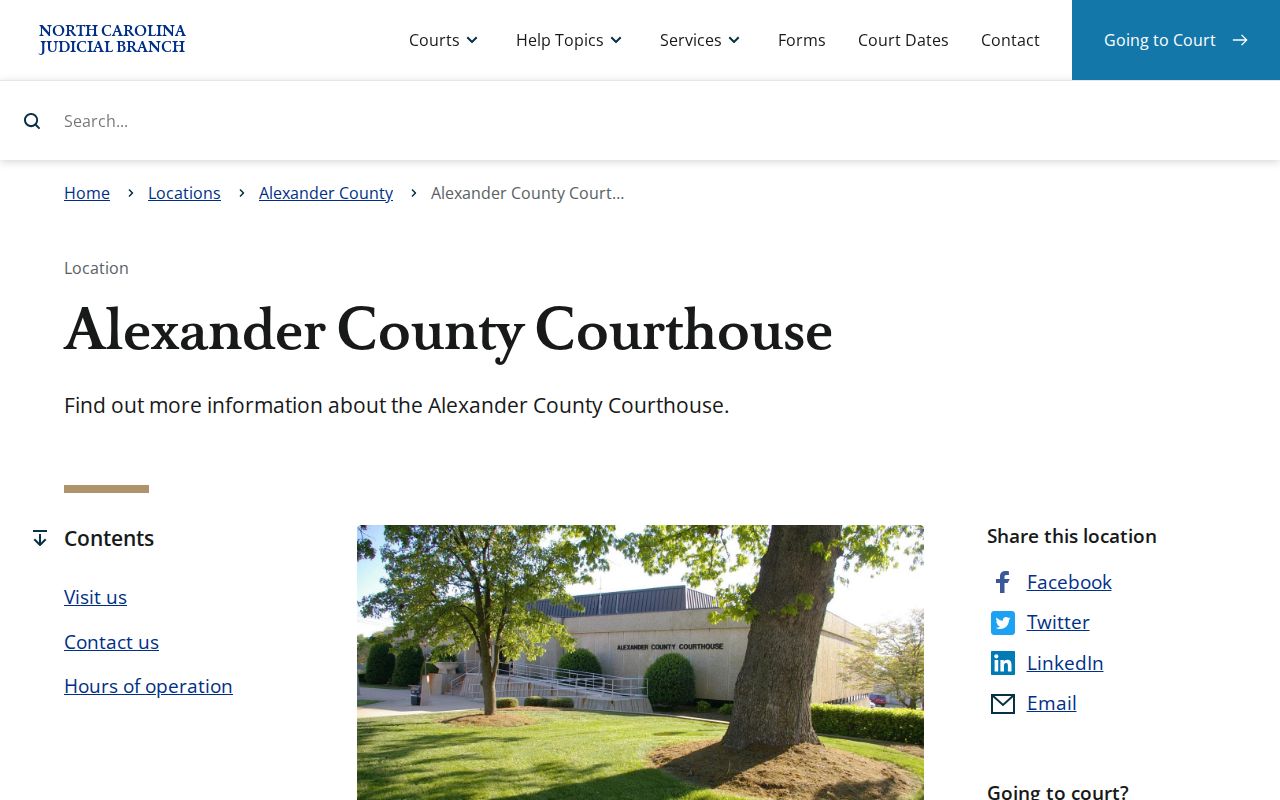
Need to see a file in person? That courthouse is the fallback for public inspection, record copies, certification questions, and anything the online system does not fully provide.
Finding Court Dates and Settings
Checking an Alexander County court date? Start with Search Hearings rather than an old event entry. Pick Alexander County as the location. Choose the hearing type. Then select a search type and enter a date range. The case number is the sharpest key. Party name, business name, attorney, judicial officer, and courtroom also work when the search type calls for them.
The Register of Actions shows a Hearings section when the system holds that information. If a setting is close, compare it with Search Hearings. Local civil rules draw careful lines. A calendar request, a pretrial calendar, a tentative calendar, and a final calendar each mean something different. A tentative setting is not a final trial date. The Alexander County court calendar page walks through the local checking sequence in more detail. One caution: a continuance can move a setting. Read the most recent event beside the active hearing result.
Alexander County Calendar Request Rules
Alexander County civil scheduling has a local procedural layer. No online hearing search can replace it. The retained local rules describe a written calendar request. It must identify the matter, the estimated duration, jury or non-jury status, any special circumstances, and opposing-side contact information. The clerk sets civil District Court calendars under judicial supervision. That is why an online setting may be one step in a longer process. It is not a final trial assignment.
For Superior Court civil cases, the local materials lay out a sequence. A pretrial calendar comes first. Then comes a tentative trial calendar, and after that a final trial calendar. Some older retained forms carry historic district numbering. Do not read that as current branding for Alexander County's District 32 courts. For a particular setting, Search Hearings and the clerk are the live channels. The Alexander County local rules and forms page is the official source for the calendaring materials.
When a Portal result needs procedural confirmation, the contact directory lists the local lines to call.
Public Access to Dockets
Alexander County court dockets are generally open to the public. The limits come from statute and court restriction. For ordinary available matters, the Portal provides public case summaries. The clerk handles local inspection and copies. None of that erases confidentiality rules. Sealed records, confidential material, sensitive documents, unreturned warrants, juvenile records, and protected-order information stay limited by law.
A missing Alexander County result can mean a typo. It could be the wrong court route, no matching case, or a restricted record. It does not prove a record is open for release. The local clerk can point you to the right procedural channel, though access to a sealed or confidential file still depends on the governing law or order.
Key rules:
G.S. 7A-109 requires clerks to maintain records and generally permits public inspection unless another law restricts access.
G.S. 132-6 addresses reasonable supervised inspection and prompt copies after lawful fees are paid.
G.S. 15A-151 limits disclosure of expunction files.
G.S. 7B-2901 restricts juvenile abuse, neglect, and dependency records.
Alexander County Restricted Docket Access
Alexander County public access works on two layers. An ordinary civil, criminal, estate, or nonconfidential special proceeding may carry a searchable Case Summary. Even then the Portal masks public birth-date display and withholds sensitive material. It also flags unreturned warrants, juvenile records, and protective-order records as restricted. Elevated Access goes only to people authorized by law, and it never makes confidential material broadly public.
Expunged and sealed matters demand special care. An expunction file is not a routine public-record request. A blank public search proves nothing about legal status. When an Alexander County file involves a restriction, the real question is whether access is authorized. A better keyword cannot slip past the restriction. The North Carolina eCourts overview describes the statewide system that now serves all counties.
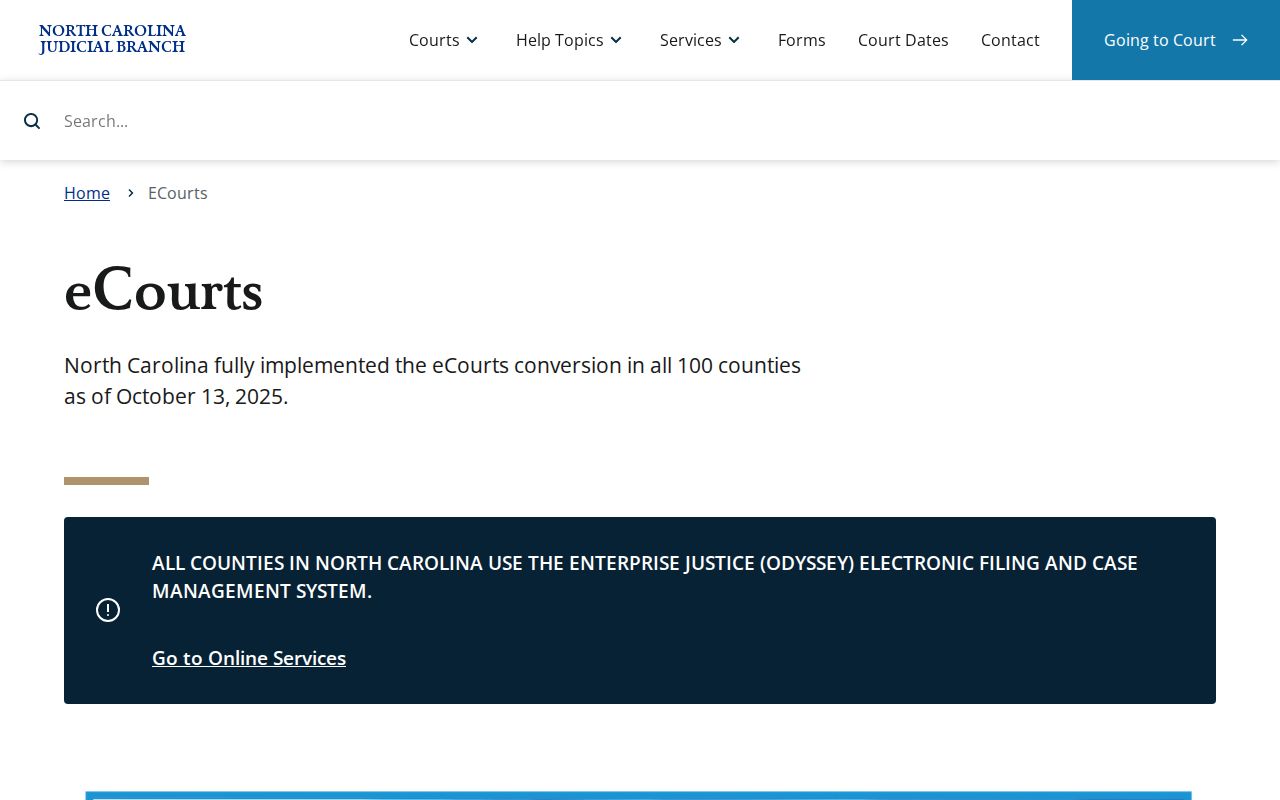
Alexander County users can search the statewide system freely. Access itself, though, still turns on the record type and the applicable law.
The Clerk and Docket Records
The Alexander County Clerk of Superior Court keeps the files for Superior Court and District Court, along with estates, special proceedings, and court financial records. The eCourts Portal helps, but its Register of Actions is not the official court record. Need a filed document or a certified copy? The clerk is the place to go. The same goes for a question about an old case file or an in-person look at an eligible record.
Bring the right details when you make an Alexander County court docket request. The case number comes first. Add the court or division, the document or event, and whether you need a plain copy or a certified one. The statewide fee chart sets $2 for the first page of a document, $0.25 for each page after that, $3 for a certificate under seal, and $10 for exemplification. Ask the clerk to confirm the total. The chart does not fix one price for every request.
Alexander County Clerk of Superior Court
Alexander County Courthouse
29 W. Main Ave.
Taylorsville, NC 28681
(828) 635-3113
Mail: PO Box 100, Taylorsville, NC 28681
Alexander County Clerk Copy Options
A records request to the Alexander County clerk works best one way. Name the record itself, not a broad subject. A Case Summary may be enough. It can confirm that an event happened. A filed order, pleading, exhibit, recording, or judgment sits inside the case file as its own item. A certified copy or certificate is a separate clerk service. A transcript is different again; it comes from the court reporter or recording process when one is available.
Self-service terminals in the clerk's office let you view eligible records free. Printing and clerk-prepared copies can cost extra. Do not use the county-government public-records form for a court file. That form covers county-government material, not state court records. When a request stalls, the right fallback is the clerk in the county where the case was filed.
| Requested item | Alexander County starting point | Fee information |
|---|---|---|
| Portal Case Summary | Smart Search public view. | Free ordinary public access; not the official court record. |
| Plain court-file copy | Clerk, with case number and document identified. | $2 first page of each document, then $0.25 per additional page. |
| Certificate under seal | Clerk certification request. | $3, plus any applicable copy service. |
| Exemplification | Clerk authentication request. | $10, with the requested service confirmed by the clerk. |
The Judicial Branch statistical and operational reports page gathers statewide reporting on how the courts run. It is one more way to see the system behind your Alexander County docket.
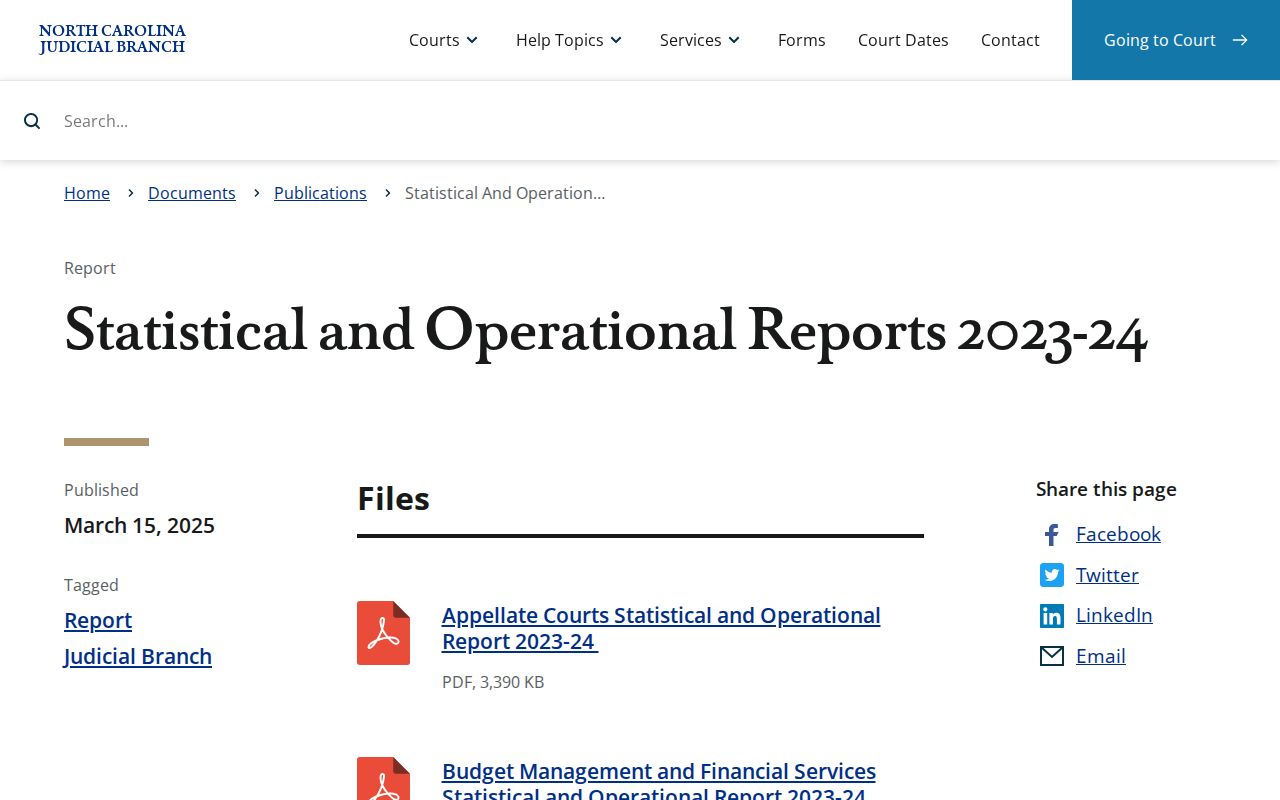
Statewide pages explain the court system, while the Alexander County Clerk holds the local case file.
Court Dockets by City in Alexander County
Taylorsville is the county seat. It is also the only incorporated municipality named in the county's candidate-information guide. No separate Taylorsville municipal court operates there. A Taylorsville traffic ticket, criminal case, civil suit, estate, or family matter all travel the same Alexander County state-court route: the eCourts Portal for public case lookup and the Clerk of Superior Court for anything about the file itself.
The town's 2020 Census population was 2,183, per its land-use plan. That number describes the town, not the court docket load. Town Hall does keep municipal administrative records. But it is not the state clerk's office. It should never get a request for an Alexander County court file.
Taylorsville Court Docket
2020 Census population: 2,183 · State court cases use the Alexander County Portal and Clerk route.
An image from the Alexander County history and exploration page adds local courthouse context.
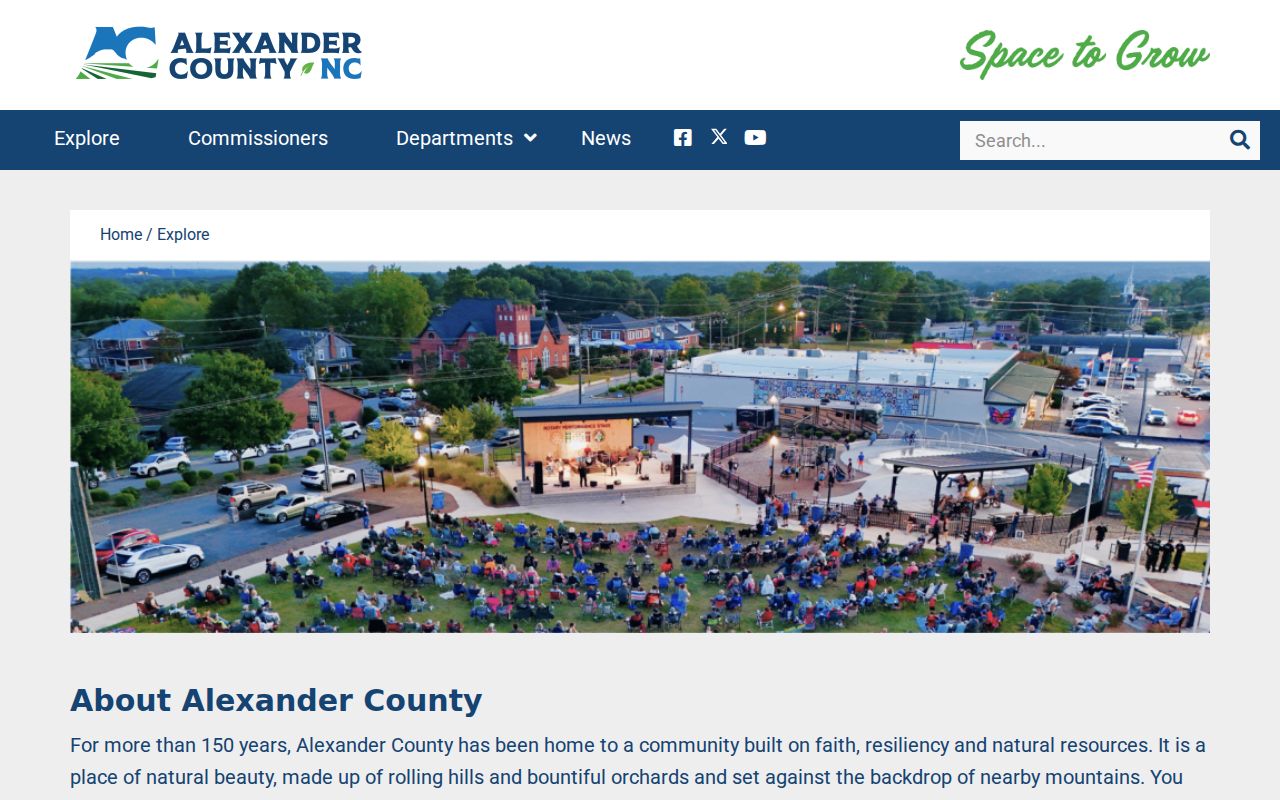
Old cases can be hard to find online no matter how historic the county is. For an older Alexander County file, ask the clerk directly.
Map and Directions to the Alexander County Courthouse
Superior Court District 32, District Court District 32, the Clerk of Superior Court, and the county's magistrates are all listed at the single Alexander County Courthouse, 29 W. Main Ave., in Taylorsville. The 1970 building replaced an earlier courthouse on the same site that burned in 1967. Because Alexander uses one courthouse for every trial-division docket, a felony, civil, estate, or family filing is reached through the same clerk counter.
Alexander County Courthouse
29 W. Main Ave.
Taylorsville, NC 28681
(828) 635-3113
Monday through Friday, 8:00 a.m. to 5:00 p.m.
Mail: PO Box 100, Taylorsville, NC 28681
The magistrate's line is a separate extension, (828) 635-3119, at the same address. No official source publishes a parking policy, security-screening procedure, or floor plan for the building, so call the clerk's line before the trip to confirm current entry rules and whether the file being sought is available for in-person inspection.